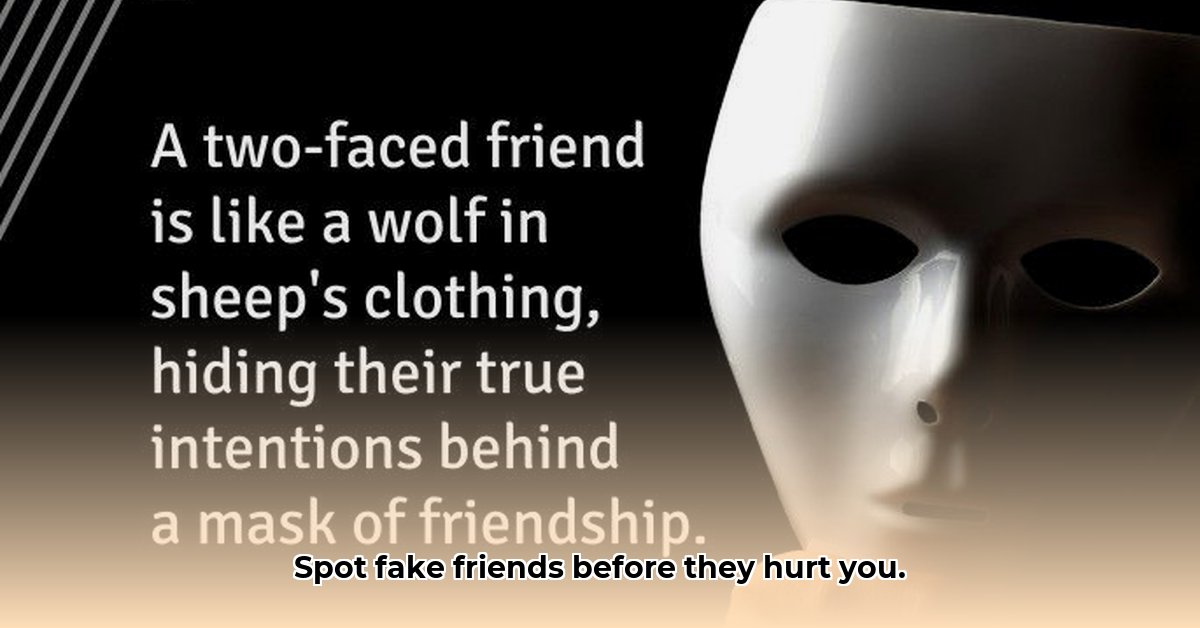
Is That "Friend" Really There For You? Unmasking Fake Friendships
Eish, navigating friendships can be a minefield, hey? Sometimes, that icky feeling you get around a certain "friend" is your gut telling you something's not right. Maybe it's the drama, the one-sided support, or that constant feeling of walking on eggshells. This isn't just about identifying the red flags; it's about getting the tools to ditch toxic relationships and build a life surrounded by genuine, supportive people. This guide will help you spot those fake friends and move forward, stronger and more confident in your relationships.
Recognizing the Red Flags: Spotting a Fake Friend
Let's be honest, sometimes friendships aren't all sunshine and roses. How do you tell the difference between a true bestie and a friendship imposter? It's about noticing patterns, not just isolated incidents. Here are some major red flags:
Conditional Cheerleaders: These friends are only around when it suits them. Their support feels transactional, not genuine. They’re all praise when you're winning, but vanish when things get tough. Think about it: does their enthusiasm match their actions? Are they consistently there for you, or only when it benefits them?
The Gossip Mill: Do they constantly dish dirt on others? A friend who gossips about others behind their backs will likely do the same to you. This behaviour shows a lack of respect and trust. Remember, true friends lift each other up, not tear others down.
All Take, No Give: Is this friendship a one-way street? Do they constantly prioritize their needs, demanding your time and energy while offering little in return? Do they only reach out when they need something, disappearing otherwise? A genuine friendship is a two-way street, marked by mutual support and understanding.
Ghosting When You Need Them: True friends are there for you, thick and thin. Fake friends conveniently disappear when you're facing a tough time, leaving you feeling alone and unsupported. A real friend will offer a shoulder to cry on, whether it’s a small issue or something more substantial.
Weaponizing Your Secrets: A genuine friend keeps your confidences safe. If someone uses your personal information against you, it's a serious breach of trust. This is a clear indicator of a toxic relationship, and you deserve better.
Surface-Level Small Talk: Real connections go deeper than small talk and polite pleasantries. If your interactions feel superficial and lack meaningful conversations, it might indicate a lack of genuine connection.
Taking Charge: Reclaiming Your Emotional Well-being
Recognising a fake friendship is the first step. Taking action empowers you to regain control and protect your emotional health. Remember, you're worthy of genuine connections.
Step 1: Honest Self-Reflection: Take time to honestly reflect on the relationship. What are the real benefits? Is the friendship worth the emotional cost? Consider making a simple pros and cons list to weigh the good against the bad.
Step 2: Setting Healthy Boundaries: Gradually reduce contact. Don't overshare; protect your personal space and energy. It's okay to politely decline invitations or limit your time with them.
Step 3: Cultivating Authentic Connections: Focus on nourishing relationships with people who truly value you. These are the people who celebrate your wins and offer support when you need it most.
Step 4: Seeking Support: Sometimes, talking to a trusted friend, family member, or therapist can be incredibly helpful. They can offer valuable perspective and emotional support.
Moving Forward: Building a Circle of True Friends
This is a journey of self-discovery. It's about defining your needs and setting boundaries for what you deserve in a friendship. Building genuine connections takes time and effort, but the rewards are immeasurable. Prioritize relationships built on mutual respect, empathy, and unconditional support. Remember, you deserve better. It's okay to let go of relationships that no longer serve you.
Expert Insight: The Psychology of Fake Friendships
Dr. Amara Singh, Clinical Psychologist at the University of Johannesburg, shares her perspective: "Fake friendships thrive on manipulation and a lack of genuine empathy. Recognising these patterns is crucial for protecting your emotional well-being. Remember your worth, and prioritise your own happiness."